Artificial Intelligence is no longer experimental in software engineering. AI copilots now assist developers in writing code, generating tests, documenting APIs and even identifying vulnerabilities in real time.
For Agile teams, this shift is transformational. But transformation without structure can create friction.
At Skillmine, we see AI copilots as force multipliers that must be embedded within governance, DevSecOps and delivery discipline.
For Agile teams, this shift is transformational. But transformation without structure can create friction.
At Skillmine, we see AI copilots as force multipliers that must be embedded within governance, DevSecOps and delivery discipline.
How AI Copilots Reshape Agile Delivery
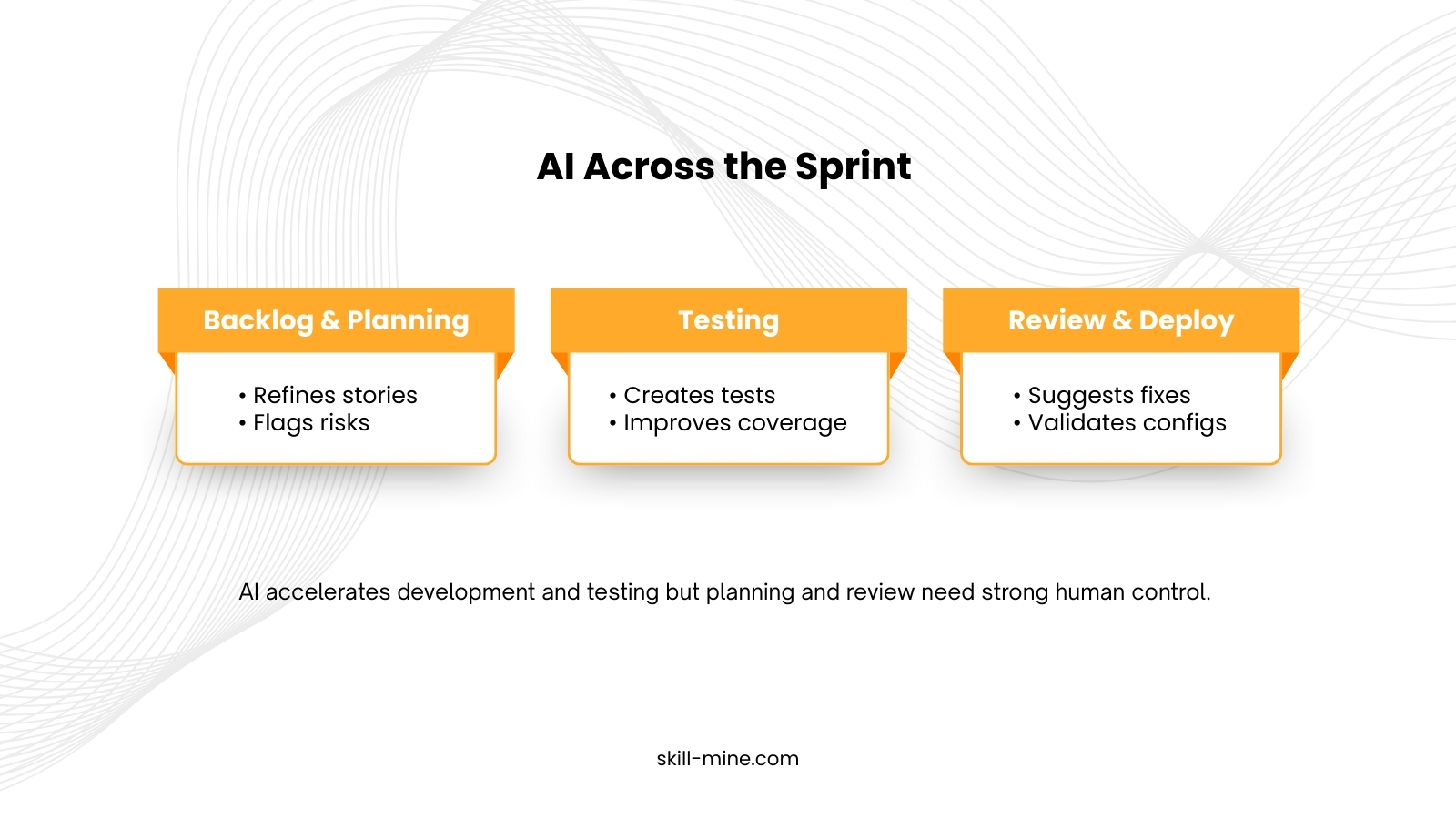
AI influences every stage of the sprint lifecycle. The question is not whether it helps. The question is where it accelerates value and where it introduces risk.
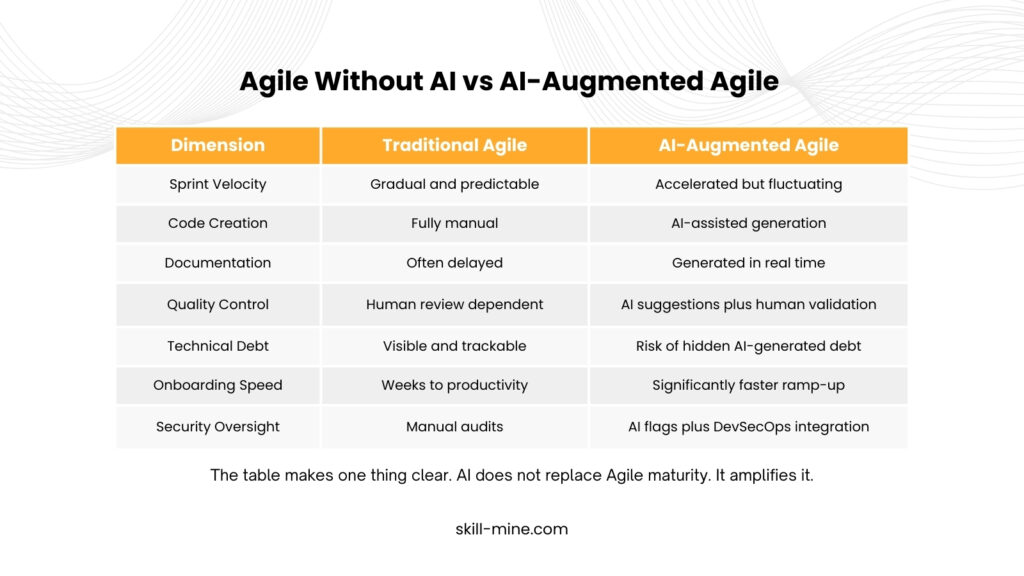
Productivity Boost Happens When
- Agile processes are standardized
- DevSecOps pipelines are mature
- AI outputs are reviewed and validated
Process Disruption Happens When
- Governance is undefined
- Teams over-rely on auto-generated code
- Sprint metrics are not recalibrated
- Security reviews are skipped
The Skillmine View: Controlled AI-Augmented Engineering
AI copilots must be embedded into structured engineering models, not layered on top of weak processes.
A successful AI-enabled Agile framework requires:
- Defined AI usage guidelines
- Integrated security checks in CI/CD
- Separate tracking of AI-assisted velocity
- Compliance-ready code review practices
- Continuous AI literacy for developers
The future of Agile is not about replacing engineers. It is about elevating them.
AI copilots can deliver measurable productivity gains. But without governance, they risk destabilizing the very agility they aim to enhance.
The real competitive advantage lies in disciplined AI adoption backed by strong engineering foundations.